
How to run a foster program without losing track of anyone
Foster-based rescue is the best deal in animal welfare: animals decompress in real homes, kennel space stays free for emergencies, and adopters get honest notes about how a dog actually behaves on a couch. The catch is operational. The moment your animals live in fifteen different houses, “where is everyone?” becomes a genuinely hard question.
Most foster coordinators carry the answer in their heads. That works until the coordinator takes a vacation, or the program grows past a dozen homes, or someone asks a simple question like “who had Biscuit last spring?”
The three questions your records must answer
A foster program’s tracking system, whether it’s software or a very disciplined binder, has to answer three questions instantly:
- Who has which animal right now? Not “probably the Martinez family.” A record, with a start date.
- Who has room? Each foster home has a real capacity, two cats, one big dog, a bottle-baby setup. When a litter comes in at 9 PM, you need the list of homes with space, not a group text and hope.
- What’s the history? When an adopter asks about a dog’s past, or a behavior question comes up, the chain of placements tells the story. So does the gap between them.
If any of these takes more than a minute to answer, the program is running on memory, and memory doesn’t scale and doesn’t transfer.
Track the placement, not just the animal
The common spreadsheet mistake is a single “Foster” column on the animal list. That tells you where an animal is today and destroys everything else: how long the placement has lasted, who fostered them before, why they came back.
Treat each placement as its own record: animal, home, start date, expected return, actual return, notes. Suddenly you have answers to questions that used to require archaeology. Which homes take the medically fragile cases? Which placements tend to run long? Who is quietly your most experienced kitten foster?
Expected return dates are your early-warning system
The most useful field in a foster record is the humble “expected return.” It turns vague arrangements into schedules:
- A two-week respite stay that hits week five gets noticed, and you check in before the foster burns out.
- Kittens due back for spay surgery at eight weeks show up on your radar in time to book the vet.
- “Foster to adopt” trials get a real decision date instead of drifting.
Don’t make your fosters fight your system
Foster homes are volunteers with full lives. The information you keep on them should make their lives easier: current contact info, capacity, and notes about preferences (“no toddlers, great with shy dogs”). When a coordinator can filter to “homes with space that take seniors,” placements happen in one phone call instead of five.
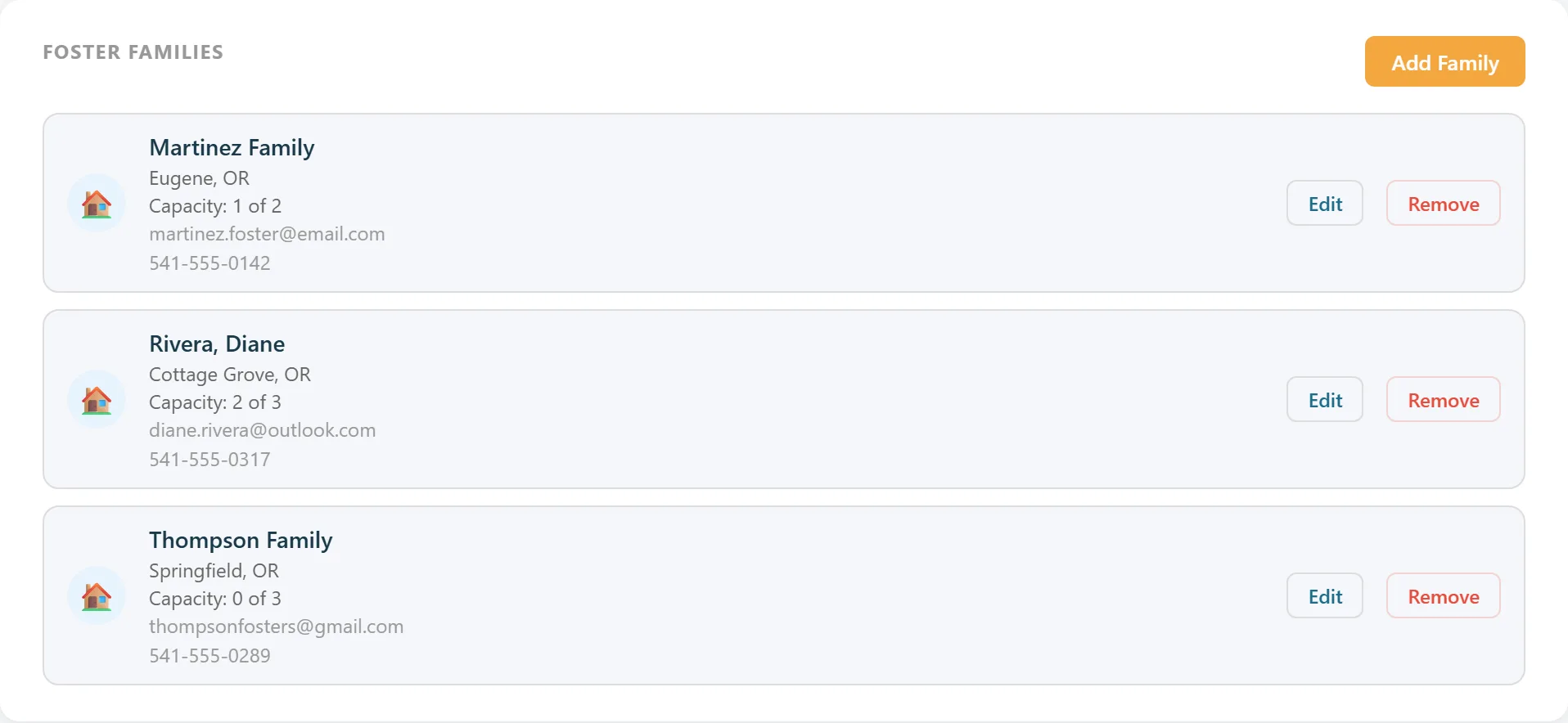
A foster directory that shows capacity at a glance: who has room tonight, without a group text.
The payoff
A tracked foster program survives coordinator turnover, answers adopter questions with real history, and places animals faster because capacity is visible. The animals were always in good hands. Now the information is too.
Furdentify includes a foster home directory with capacity, per-animal placement history, and expected return dates, alongside the rest of your shelter records. See the features or get started.