
Microchip tracking for shelters: stop losing the thread on lost pets
A microchip is only as useful as the record behind it. Every shelter has seen the sad version of this story: a chipped dog comes in as a stray, the chip traces to a registry entry with a disconnected phone number, and an easy reunion turns into a two-week hold.
Shelters sit in the middle of the microchip system, and the ones that treat chip data as a first-class record, not a number scribbled on an intake form, reunite more pets and create fewer headaches for themselves.
Scan twice, record once
Best practice is to scan every animal at intake and again before any outcome. The intake scan catches strays with existing owners; the outcome scan catches the surprisingly common case where a chip was missed the first time under matting, scar tissue, or a wiggly patient.
Where shelters slip is the “record once” half. The chip number gets written on paper, typed into a spreadsheet with a typo, or logged without the registry name. Months later nobody can say which registry to call. Your management system should store both the chip number and the provider on the animal’s profile, so the lookup path is always one click away.
Duplicate records are a microchip problem in disguise
Here’s a failure mode most shelters don’t attribute to microchips: the same animal ends up with two records. A cat is adopted out, comes back a year later as a “stray,” and gets a fresh intake record because nobody recognized her. Now the medical history is split across two files, and the second record is missing the spay date, vaccine history, and behavior notes that would have sped everything up.
The chip is the fix. If your software checks the chip number at intake and warns you when it’s already on file, the returning animal is flagged before the duplicate exists. In Furdentify, that check happens right on the intake form: enter a chip that matches an existing record and you’ll see the match, including animals already adopted out, with a nudge to reopen the original record instead of creating a new one.
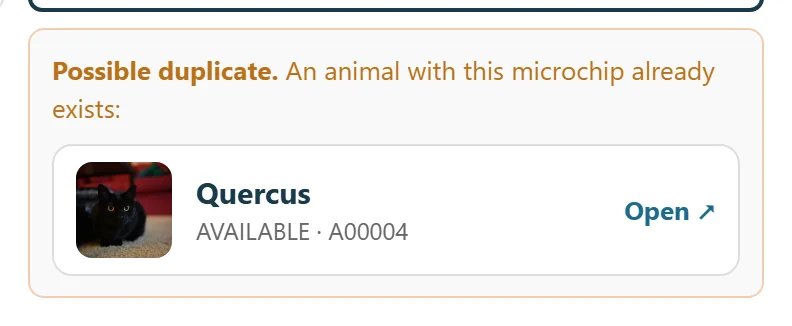
Enter a chip that’s already on file and intake flags the match before a duplicate record exists.
Keep registrations from going stale
The registry entry, not the chip, is what reunites pets. Two habits make the difference:
- Register or transfer the chip at adoption. Whether your shelter updates the registration or the adopter does, make it a checklist item tied to the adoption, not a “we mention it in the packet” hope.
- Record the provider with the number. AAHA’s universal lookup tool can identify which registry a chip belongs to, and having the provider on file means staff aren’t guessing which registry to call at 4:55 PM on a Friday.
What this looks like day to day
- Every animal profile shows the chip number and provider, with a one-click registry lookup.
- Intake warns you when a chip is already in your system, so returns don’t become duplicates.
- Your ID validation catches obvious typos (chips are usually 9, 10, or 15 characters) before they’re saved.
None of this is glamorous. All of it is the difference between “we scanned it and found the owner in ten minutes” and a kennel occupied for two weeks by a dog whose family lives four blocks away.
Furdentify tracks chip numbers and providers on every animal, flags duplicate chips at intake, and links straight to registry lookup. Get started.